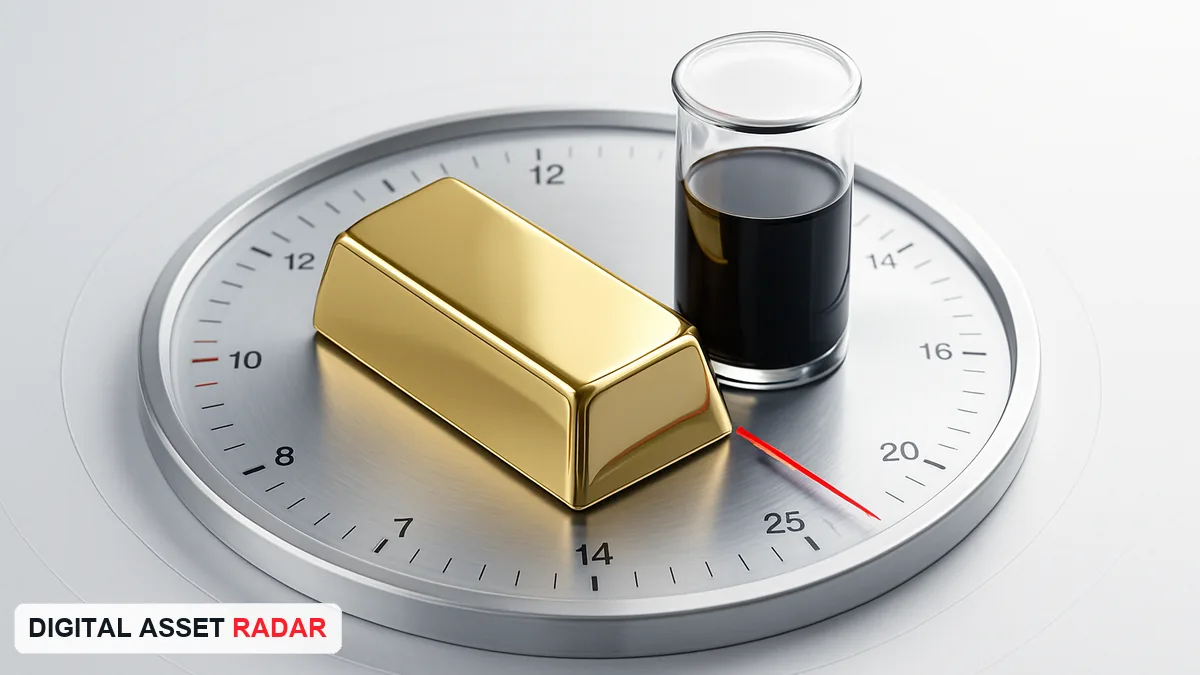
CME Group’s 24/7 gold and oil trading goes live on July 24, 2026, when two new micro contracts — a one-ounce gold future and a 10-barrel crude oil future — open both markets to round-the-clock trading. Veteran floor trader Todd “Bubba” Horwitz argues this structural shift matters more for prices than any single Federal Reserve meeting, because it changes how volatility moves through the market rather than just where prices sit today.
Speaking on the Daniela Cambone Show, published by ITM Trading on June 29, 2026, Horwitz framed July 24 and July 26 as the real turning point for gold and crude — not the “July 4th gold reset” theory circulating online. Here is what the change actually does and why it cuts both ways.
Key takeaways
- CME 24/7 gold and oil trading begins July 24–26, 2026 via two micro contracts: gold priced on one ounce and crude oil priced on 10 barrels, per Horwitz’s account of the CME Group launch.
- The move opens gold and crude to overnight sessions in Australia and South Korea, extending liquidity around the clock.
- Horwitz expects US equities and options to move to 24/5 trading by September 2026 and “all markets” to reach 24/7 by year-end.
- The likely effect is smoother, more spread-out volatility — bad for short-term floor traders, largely irrelevant for long-term investors.
- Horwitz reads heavy GLD put buying and gold’s drop from about $5,500 to $4,000 as panic hedging near a bottom, not the start of a deeper breakdown.
What changes with CME 24/7 gold and oil trading
CME 24/7 gold and oil trading is the launch of two new around-the-clock micro futures contracts by CME Group, the world’s largest derivatives exchange. According to Horwitz, one contract settles on a single ounce of gold and the other on 10 barrels of crude oil, going live on July 24 and July 26, 2026. Because the contracts are tiny, they lower the barrier to continuous participation and let the exchange keep both markets open with no holidays and no overnight gap.
The strategic logic is simple: exchanges are for-profit businesses. “They want to open the markets up to Australia. They want to open the markets up to South Korea,” Horwitz said, arguing the only way to capture those time zones is to run on their clock. Continuous trading means more volume, more fees, and more revenue.
Horwitz sees this as the leading edge of a broader shift. He said US equity and options markets are already scheduled to move to 24/5 trading around September 2026, and predicted that by the end of the year, “all markets” will trade 24/7 — no weekends off, no holiday closes. For a crypto audience, that direction is familiar: Bitcoin and digital assets have always traded around the clock, and legacy commodities are now following.
Why 24/7 trading spreads out volatility
The most important consequence of CME 24/7 gold and oil trading is what it does to volatility. “It depends on what side you’re on,” Horwitz said. “If you’re a trader like me, it’s bad news, because it spreads out the volatility.”
Continuous markets tend to smooth sharp moves rather than concentrate them. Under the current schedule, weekend news festers with no way to trade it, so positioning stampedes into the Monday open — which is why, as Horwitz noted, “the biggest sell-offs come on a Monday.” When a market never closes, that pressure bleeds out gradually instead of gapping. The result is fewer violent single-session moves and more evenly distributed price action.
For a professional who makes money on those sharp intraday swings, that is a headwind. For a buy-and-hold investor, Horwitz said, the change has “zero effect” — you still own the same ounce of gold whether it trades 8 hours a day or 24.
Gold’s correction: panic hedging, not a breakdown
Gold has fallen from roughly $5,500 to around $4,000, a drop of more than 20% that puts the metal technically in a bear market, per Horwitz’s figures as of late June 2026. Traders have piled into bearish protection: he cited over $130 million in put premium on heavy down days, deep out-of-the-money strikes such as a 240 GLD put for June 2028, and a put/call skew at extremes “not seen since bear markets.”
Horwitz reads that positioning as a bottoming signal rather than conviction selling. Large holders, he argued, are buying puts to hedge existing long positions — “they’re overpaying for it” as rising demand pushes volatility and option prices higher. “When you can see their tonsils, give them whatever they want. They’re wrong,” he said, invoking an old floor-trading maxim about crowded panic.
He tied the setback to a genuinely hawkish Fed under Kevin Warsh, with Fed funds futures pricing roughly a 65% chance of a rate hike and one to two hikes possible in 2026. Higher rates pressure gold, but Horwitz stuck to his longer-term call, saying he “wouldn’t be surprised if gold hits $6,000 this year.” That echoes the parabolic-correction pattern Jim Rogers and Jim Rickards describe — a 50% pullback before the uptrend resumes — a dynamic we also examined in the silver sell-off.
Forget the July 4th “gold reset”
Horwitz was blunt about the July 4th “gold reset” theory, spearheaded by economist Judy Shelton’s proposal for Treasury-issued, gold-convertible 50-year bonds tied to America’s 250th anniversary. He called it “just noise.” A government cannot simply “hit a reset button” on the gold price, he argued — price is set by the free market. The only genuine change would be formally backing the dollar with gold or letting states treat gold as legal-tender currency.
That skepticism is worth weighing against the broader monetary-reset debate. We covered the more substantive version of that argument — a deliberate Treasury revaluation of US gold reserves — in the gold revaluation and $10,000 Treasury bond thesis, and the shift toward physical settlement in China’s new gold system. Horwitz’s point stands: a calendar date and a headline are not a monetary reset.
Frequently asked questions
When does 24/7 gold and oil trading start on the CME?
According to trader Bubba Horwitz, CME Group launches 24/7 trading for gold and crude oil on July 24 and July 26, 2026, through two new micro contracts — a one-ounce gold future and a 10-barrel crude oil future. The micro size is designed to open continuous participation to overnight time zones like Australia and South Korea.
Will 24/7 trading reduce gold price volatility?
Horwitz argues that continuous trading spreads volatility out rather than concentrating it. Because markets that never close let news bleed into prices gradually, they tend to smooth the sharp single-session moves — such as heavy Monday sell-offs — that build up over weekend closures. Short-term traders lose an edge; long-term investors are largely unaffected.
Is the July 4th gold reset real?
Horwitz dismisses the July 4th “gold reset” as noise. He argues no government can reset the gold price by decree, since price is set by the free market, and that only formally backing the dollar with gold would count as a real monetary shift. The structural change he watches instead is the CME’s move to 24/7 trading on July 24, 2026.
Is gold’s 2026 drop a buying opportunity?
Horwitz interprets gold’s fall from about $5,500 to $4,000 and the extreme put buying in GLD as panic hedging near a bottom rather than a lasting breakdown. Citing the Jim Rogers rule that parabolic commodities correct roughly 50% before resuming, he maintained a call for gold as high as $6,000 in 2026 — though this reflects one trader’s view, not investment advice.