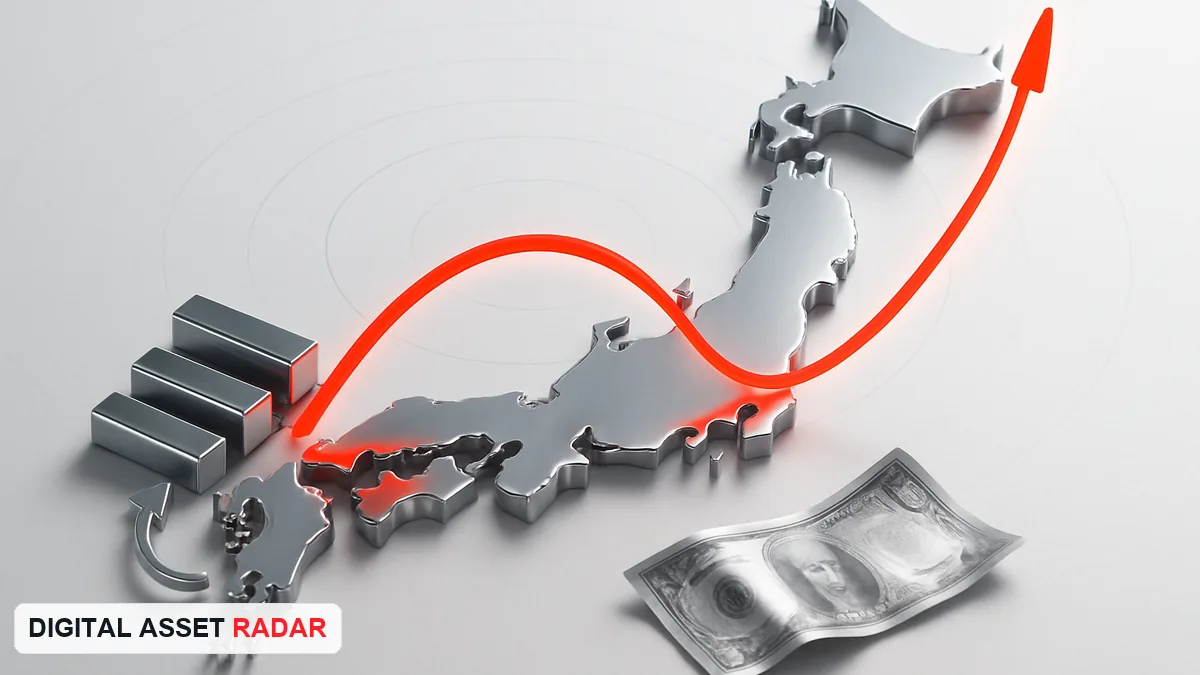
The US-Japan yen intervention at the end of July 2026 was the largest coordinated currency operation ever attempted — Japan spent roughly $53 billion in a single day buying its own currency, and the New York Fed, acting for the US Treasury, joined in for the first time in about three decades. Within 40 minutes of the news hitting the wires, nearly $1 trillion was wiped off the value of US stocks, for reasons almost no headline explained.
The connective tissue is the yen carry trade: hundreds of billions of dollars of borrowed Japanese money sitting inside US equities and bonds. That is the argument made by former investment banker Felix Prehn, founder of Goat Academy, in an August 2, 2026 video — and unlike most crash commentary, the evidence is on the public record, including a photograph of the US Treasury Secretary’s notepad.
Key takeaways
- Japan spent about $53 billion in one day buying yen, the biggest single-day currency intervention in history, after the yen slid to roughly 160 per dollar — its weakest level since 1986.
- Washington broke a 30-year taboo. The US bought yen alongside Tokyo — funding the purchase by selling euros rather than dollars. The last coordinated yen rescue was in the 1990s; the last coordinated intervention of any kind was 2011, after Japan’s earthquake and tsunami.
- The plan leaked before it was announced. A camera captured US Treasury Secretary Scott Bessent’s cabinet-meeting notepad reading “buy Japanese yen, $5–10 billion.”
- A trillion dollars vanished in 40 minutes. The S&P 500 flipped from +0.7% to −1.2% on the intervention headlines — not a verdict on US companies, but a margin call on the yen carry trade.
- The scariest part is how little moved. The two biggest chequebooks on Earth fired together and the yen only travelled from about 164 to 157. A disorderly unwind from here is the live risk.
What happened in the US-Japan yen intervention, step by step
Prehn’s framing is that four apparently separate stories were one machine. Laid out in sequence, the mechanics are simple.
Step one: the yen bled out. Through the first half of 2026 the yen fell steadily to roughly 160 per dollar — a four-decade low. For a nation of savers, that is national savings draining out of the bottom of a bucket.
Step two: Tokyo went all in. On the Thursday of that week (July 30, 2026), Japan’s Ministry of Finance spent an estimated $53 billion in a single trading day buying yen. Japan publishes its intervention totals on the Ministry of Finance’s foreign exchange operations page, where the record will ultimately be confirmed.
Step three: America joined. The New York Fed, which executes foreign exchange operations for the US Treasury, bought yen too — selling euros to do it rather than dollars, sparing the dollar while still tightening yen supply.
Step four: the market found out. Reuters reported that the US was preparing to enter the yen market. The S&P 500, up 0.7% on the day, was down 1.2% forty minutes later.
As one analyst quoted by Prehn put it, you do not run coordinated intervention in supposedly free markets unless you know there is a serious problem under the hood.
The leaked Bessent notepad
The detail that removes the guesswork is photographic. During a cabinet meeting that same week, a camera caught the notepad in front of Treasury Secretary Scott Bessent. Under an underlined “to do” heading, it read: buy Japanese yen, $5 to $10 billion.
That is a policy intention to intervene in a foreign currency market, photographed before any official announcement. This was not a panicked reaction to a bad print; it was a prepared operation with a budget attached.
Why yen news erased $1 trillion of American stock value
Here is the question the financial media largely skipped: why would news about the Japanese currency destroy a trillion dollars of US equity value in under an hour?
Because Japanese money is holding up US assets. For two decades Japan kept interest rates near zero, so large funds could borrow yen for almost nothing, convert it to dollars, and buy US stocks and Treasuries yielding 4–10%, keeping the spread. It is, in Prehn’s phrase, the secret printing press Wall Street has run for decades.
The trade has exactly one requirement: the yen must stay weak. You borrowed in yen and you must repay in yen, so a falling yen shrinks your debt for free. The moment the yen strengthens, that loan starts growing. Lenders demand more collateral — a margin call — and the borrower has to raise cash fast. What do you sell when you need cash in minutes? The most liquid thing you own: US large-cap stocks.
So the trillion-dollar drop was not the market repricing American earnings. It was a hidden cross-border margin loan being called in, with everyone reaching for the same exit at the same second. Prehn notes hedge funds carried roughly $10 billion of outright bets against the yen into the week — positions that do not unwind politely.
Why Washington had to help Tokyo
The reason America broke a 30-year rule is not diplomacy. It is the US debt.
Japan is the largest foreign holder of US government debt, a position tracked in the Treasury’s International Capital data. Now follow the chain Prehn draws. To buy $53 billion of its own currency in a day, Japan needs dollars — and the obvious source is selling the asset it holds most of: US Treasuries.
When the largest foreign holder of your debt becomes a seller, yields rise. Higher yields make it more expensive for Washington to service roughly $40 trillion of debt, and they feed straight into mortgage rates, car loans and corporate borrowing costs. A yen in freefall therefore ends in higher American interest rates — which is precisely why the US Treasury preferred to spend euros propping up someone else’s currency. We covered that repatriation risk in detail in will Japan sell US Treasuries?
Korea was the canary in the coal mine
In the same stretch, South Korea’s KOSPI had what Prehn calls its worst single month ever, falling more than 30% — worse than 2008 (about −23%) and worse than the 1997 Asian financial crisis (about −27%). Trading was halted on back-to-back days for the first time in the market’s history. Our earlier reporting on the South Korea stock market crash of 2026 put the decline near 25% over 21 days and traced it to margin calls on a two-stock, AI-memory-concentrated index; Prehn’s month-long figure captures the fuller drawdown.
Either way the pattern is identical to the carry trade: cheap borrowed money floods into one hot thing, the trade wobbles, and the leverage rushes for the exit at once. Korea is small and fast enough to show you the sequence before it reaches the big market.
The three tells of a disorderly unwind
The honest read on this week is that the intervention underperformed: two national chequebooks firing together moved the yen only about seven points, from roughly 164 to 157. Three things would signal the next leg is disorderly rather than managed.
- Speed of the yen rally, not its level. A grind from 157 to 145 is orderly. The same distance in days is a forced unwind — every fast yen rally since 1998 has coincided with a global deleveraging.
- US 10-year yields rising while stocks fall. In a normal risk-off week, money runs into Treasuries and yields drop. If both fall together, it means the marginal seller of US stocks is also the marginal seller of US bonds — the Japanese repatriation channel opening.
- A second intervention with a smaller effect. Diminishing returns on official buying is how currency defences historically end. Japan’s own Ministry of Finance data is the primary source to check, published monthly.
What to actually do about it
Prehn’s positioning framework deliberately avoids predicting Japan’s next move.
One: don’t hold too much cash. Keep three to six months of expenses as an emergency fund; beyond that, cash is what inflation quietly taxes.
Two: own assets that gain when paper money is under stress. Quality real estate, gold, and companies with genuine pricing power — businesses that can raise prices without losing customers. That is the same logic behind our breakdown of wealth strategy in a debasement era.
Three: buy the pickaxes, not the gold rush. Rather than crowding into AI chip names — the exact trade that detonated Korea — favour the infrastructure that earns regardless of who wins: exchanges, custody firms, payment processors, the pipes.
His golden rule ties it together: if you cannot explain what a company does and why it makes money to a 12-year-old, don’t own it.
None of this requires a conspiracy. It was on the Treasury Secretary’s notepad, on the newswires and on the price charts within the same week. The only open question is which side of the machine you are standing on.
Frequently asked questions
Why did the US buy Japanese yen in 2026?
Because a collapsing yen is an American problem. Japan is the largest foreign holder of US Treasuries, and defending the yen forces Japan to sell dollar assets — pushing US interest rates up and making roughly $40 trillion of US debt more expensive to service. The New York Fed bought yen on behalf of the Treasury, selling euros to fund it, protecting the dollar while supporting Tokyo.
What is a carry trade unwind in simple terms?
Large funds borrow yen at near-zero rates, convert it to dollars and buy higher-yielding US stocks and bonds, keeping the difference. The trade only works while the yen stays weak, because the loan must be repaid in yen. When the yen strengthens, the loan gets bigger, lenders issue margin calls, and borrowers sell the most liquid thing they own — US stocks — all at once.
How much did the yen intervention cost?
Japan spent an estimated $53 billion in a single day, the biggest one-day currency intervention on record, according to figures cited in Felix Prehn’s August 2026 video. Treasury Secretary Scott Bessent’s photographed notepad indicated a US contribution of $5–10 billion. The combined effort moved the yen from about 164 to 157 per dollar.
Is the yen carry trade unwind over?
No. The intervention pulled the yen back only modestly, and the pool of yen-funded leverage in global markets is far larger than the amount of currency bought. The signals worth watching are the speed of any further yen rally, US 10-year yields rising at the same time as stocks fall, and whether a second intervention has less effect than the first.
This article is analysis and reporting, not investment advice. It is based on the source video below and public data; always do your own research.